
If you're running a small contracting business in oil and gas, construction, or industrial sectors, you need to know about the OSHA penalty increases that went into effect January 16, 2025. The maximum fine for willful and repeated violations just jumped to $165,514 per violation – and that's not a typo.
For small contractors operating with tight margins, a single major violation could seriously impact your bottom line. The good news? There's a practical way to protect your business: investing in proper safety training like SafeLand USA certification for your crew.
What Changed with OSHA Penalties in 2025
The numbers are pretty straightforward, but they're not small. Here's what you're looking at under the new penalty structure:
- Serious violations: $16,550 per violation (up from $16,131)
- Willful violations: $11,823 to $165,514 per violation
- Repeated violations: $165,514 per violation
- Failure to abate: $16,500 per day until you fix the problem
That last one is particularly brutal for small contractors. If OSHA finds a safety hazard and you don't correct it quickly, you're looking at over $16,000 every single day until it's resolved.
These increases apply to any citations issued after January 16, 2025, including inspections that were already underway when the new penalties took effect. So if OSHA was already looking at your site in January, you're subject to the higher fines.
Why Small Contractors Get Hit Hardest
Large corporations can absorb a $165,000 fine – it's painful, but it won't shut them down. For a small contractor with 50 employees, that same penalty could mean laying off workers, delaying projects, or worse.
The reality is that OSHA doesn't adjust their enforcement based on company size. A willful violation gets the same maximum penalty whether you're a Fortune 500 company or a family-owned business with 20 employees.
What makes this even tougher is that violations often come in multiples. During a single inspection, OSHA might find several related safety issues, each carrying its own penalty. A poorly managed worksite could easily rack up $300,000+ in fines from one inspection.
How SafeLand Training Online Protects Your Business
SafeLand USA certification isn't just another training requirement – it's your first line of defense against these massive penalties. When your workers complete safeland training online, you're documenting that your company takes safety seriously.
Here's what proper SafeLand certification covers for your crew:
- Hazard recognition and assessment
- Personal protective equipment requirements
- Emergency response procedures
- Industry-specific safety protocols
- Incident reporting and documentation
When OSHA inspectors arrive at your jobsite, one of the first things they'll ask for is training records. Workers with current SafeLand certification show that you've invested in proper safety education.
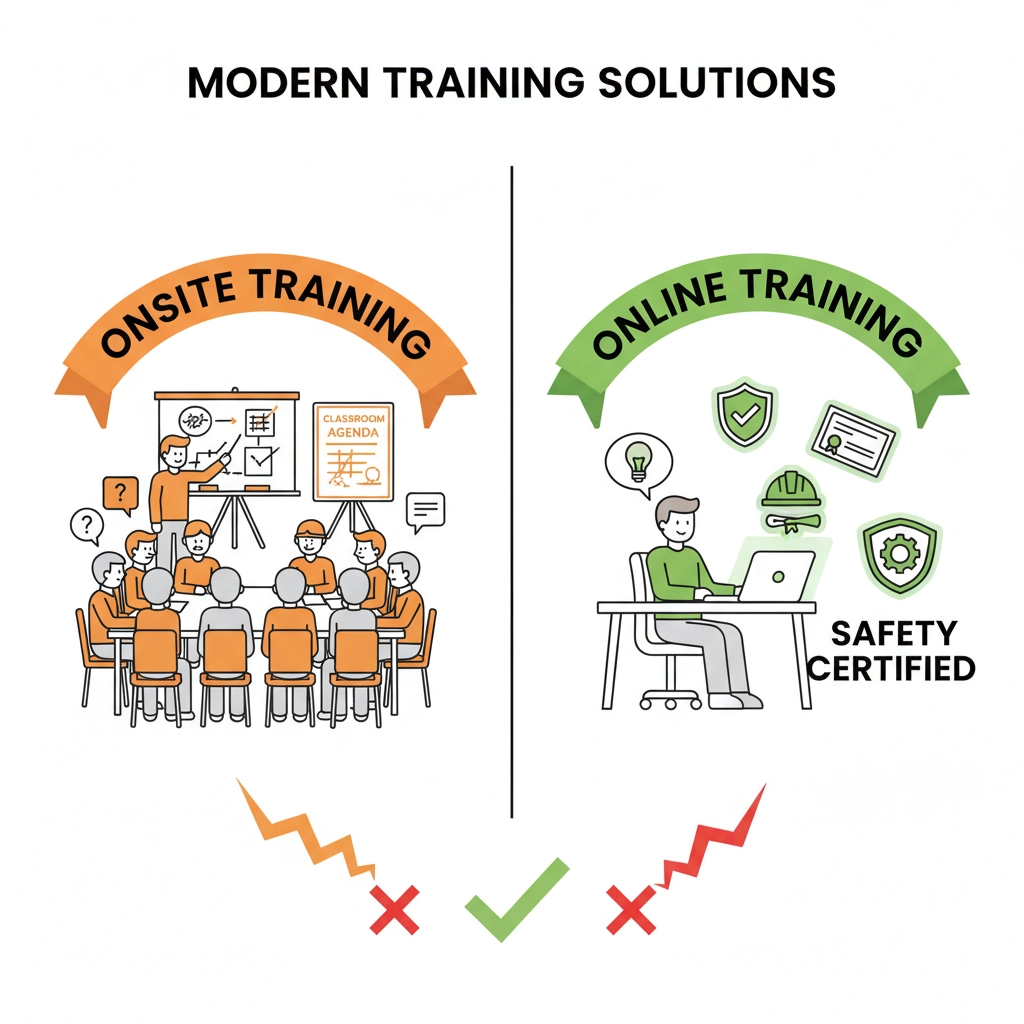
Online vs. Onsite Safety Training: The Numbers Make Sense
Let's talk practical costs. Onsite safety training typically runs $200-400 per worker when you factor in instructor fees, facility rental, and lost productivity. For a 25-person crew, you're looking at $5,000-10,000 just for the initial training.
Safeland training online changes that equation completely:
- Lower per-person cost (often 50-70% less than onsite)
- No travel time or venue costs
- Workers can complete training during downtime
- Automatic documentation and record-keeping
- Immediate certificate delivery
More importantly, online training means your workers can get certified faster when you land a new project. Instead of waiting weeks to schedule an onsite instructor, new hires can complete their SafeLand certification within days.
The Real Cost of OSHA Violations Goes Beyond Fines
That $165,514 maximum penalty is just the beginning. Small contractors face additional costs that can multiply the financial impact:
- Workers' comp increases: Safety violations often trigger higher insurance premiums
- Project delays: Work stops during OSHA investigations
- Contract losses: Many clients require clean safety records
- Legal fees: Serious violations often require attorney involvement
- Reputation damage: Word travels fast in tight-knit industrial communities
A single willful violation can cost a small contractor $200,000+ when you factor in all these indirect costs.
Prevention Is Cheaper Than Penalties
The math is pretty simple. Even if you invest in comprehensive safeland usa training for your entire crew, plus ongoing safety programs, you're probably spending less than $10,000 annually for a medium-sized contractor.
Compare that to one serious OSHA violation, which could cost $165,000 or more. The return on investment for proper safety training is enormous – potentially 15-20 times your investment.
What OSHA Inspectors Look For
Understanding what triggers violations helps you prevent them. OSHA inspectors typically focus on:
- Fall protection: Still the #1 citation in construction
- Hazard communication: Proper labeling and safety data sheets
- Respiratory protection: Especially important in industrial settings
- Lockout/tagout procedures: Critical for equipment maintenance
- Training documentation: Records showing workers understand safety protocols
Workers with current SafeLand certification demonstrate competency in all these areas. When inspectors see proper training records, they're more likely to view other minor issues as correctable rather than willful violations.

The Convenience Factor for Small Contractors
Running a small contracting business means wearing multiple hats. You're managing projects, handling sales, dealing with suppliers, and trying to keep crews productive. Traditional onsite safety training adds another scheduling headache to your already packed calendar.
Safeland training online eliminates those logistical challenges:
- Workers train on their own schedule
- No coordination with outside instructors
- Progress tracking through online portals
- Automatic reminders for renewal dates
- Instant access to certificates and records
For small contractors, this convenience translates directly to cost savings through improved efficiency.
Making the Investment Decision
The question isn't whether you can afford proper safety training – it's whether you can afford not to have it. With OSHA penalties now reaching $165,514 per violation, the risk of operating without comprehensive safety programs has never been higher.
SafeLand USA training represents a small fraction of what you could face in penalties. For most small contractors, the entire annual safety training budget costs less than a single serious OSHA fine.
Planning for Ongoing Compliance
Remember that OSHA penalties increase annually with inflation. The 2025 increases were about 2.6%, and you can expect similar adjustments each January. What costs $165,514 today will cost even more next year.
This makes ongoing investment in safety training even more important. Companies with strong safety cultures and comprehensive training programs face fewer violations and lower penalties when issues do arise.
Starting with safeland training online for your crew creates the foundation for a broader safety program that protects your business from these escalating penalties. The small investment in training today could save your company hundreds of thousands tomorrow.
For small contractors operating in high-risk industries, proper safety training isn't optional anymore – it's essential business protection. With OSHA penalties reaching new highs, can you really afford to take chances with your crew's safety training?